
The challenge that Dignity Period is helping girls to overcome in Ethiopia may seem relatively simple: Girls do not have access to adequate menstrual hygiene products, so we provide the best product available.
Simple, right? However, the real challenge is more complex.
The research we conducted last summer reveals that complexity in a variety of ways. While we are still analyzing and interpreting the data, at least three themes are prominent:
- Periods are a topic that people avoid speaking about, and therefore most people are poorly informed about menstruation.
- Cost and lack of access to pads and other menstrual hygiene products are problems for many girls and women.
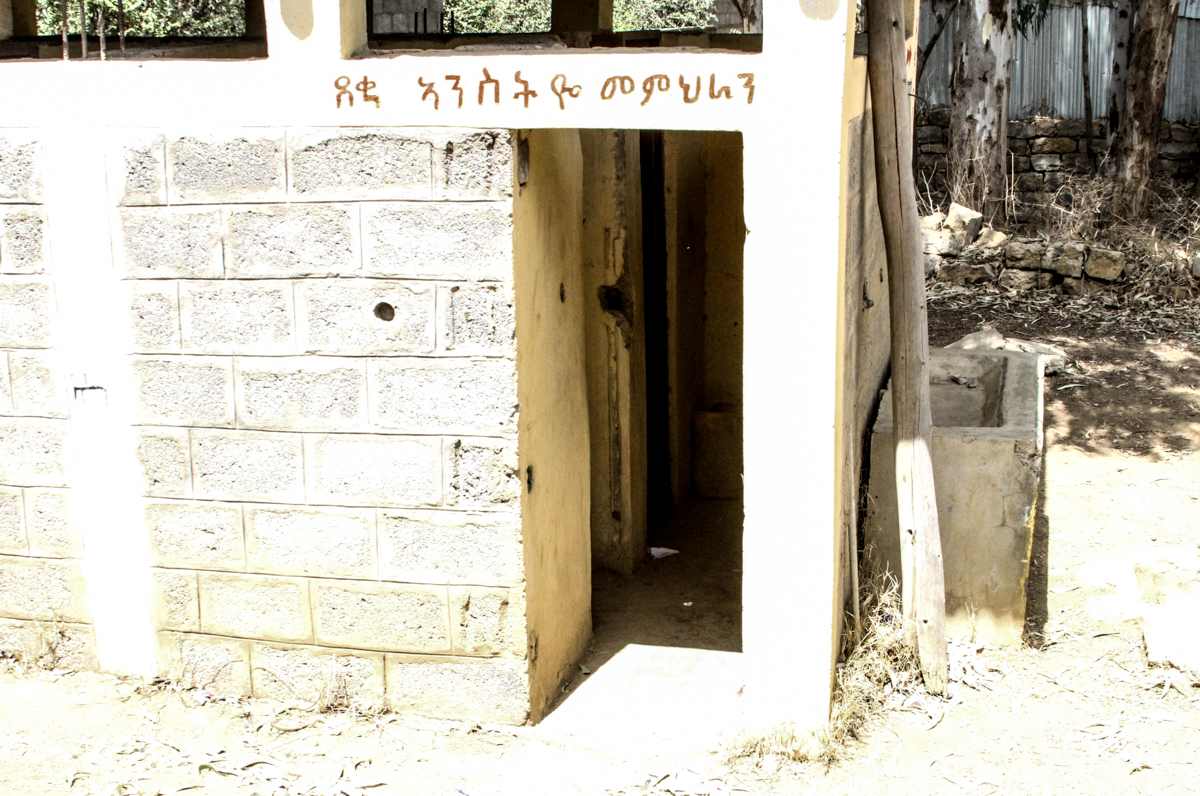
- The condition of school toilets makes it difficult for girls to manage their periods with dignity.
As part of our holistic strategy to address the menstrual hygiene challenge in Ethiopia, Dignity Period is planning to build a women’s latrine at one school in the city of Adigudem. We will also provide sanitary pads and educational materials while we collect data on school attendance. If this project improves school attendance, we could scale up and build much-needed, improved latrines at all 15 schools.
The current sanitation situation is dismal in schools in this area. Although Adigudem has treated water for its residents, running water is rare in schools. In many schools, students must bring water with them to class; older students are worried about being perceived as “uncool,” and often go without. This is not unlike students who bring “brown bag” lunches to school in the US.
Almost all of the school latrines lack running water for washing, and although most Ethiopian toilets are “squat toilets,” rather than the sitting flush toilets we are familiar with in the West, they are poorly maintained. The stalls are small, dark, and confined and generally “semi-private” at best ̶ they are not intended as places to do more than get in and out as quickly as possible. This makes it difficult (if not impossible) for girls to change pads, wash up, and otherwise deal with their periods.
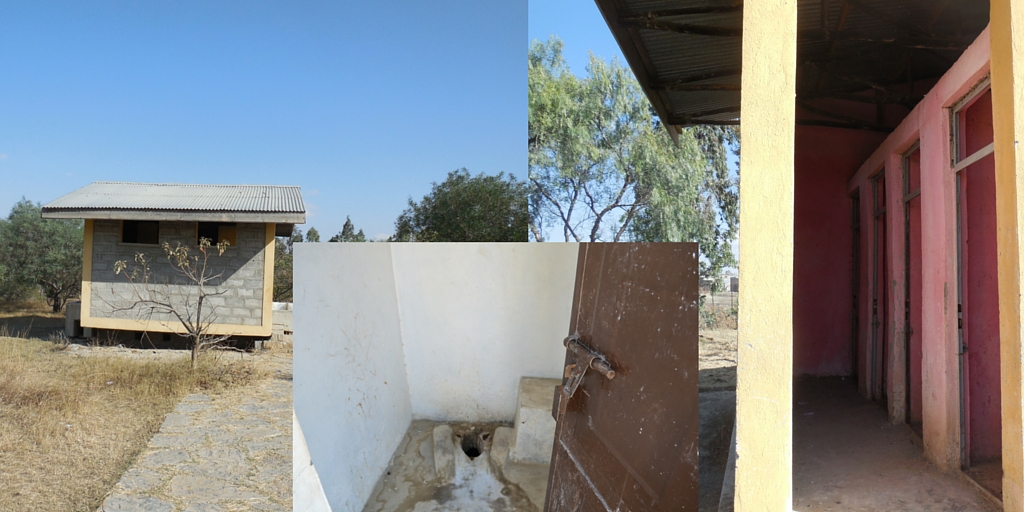
Latrines are not well-maintained and do not have private space for women or running water.
Our test site in Adigudem has one running water tap, but the water does not run all day. The tap is far away from the toilets next to a nonfunctional water tower on campus, and well-removed from the normal school activities. In the past, school employees or students would fill the water tower when the tap was fed from the city water supply. That water would then be used throughout the day for various purposes. Unfortunately, the water tower has fallen into disrepair and will no longer hold water.
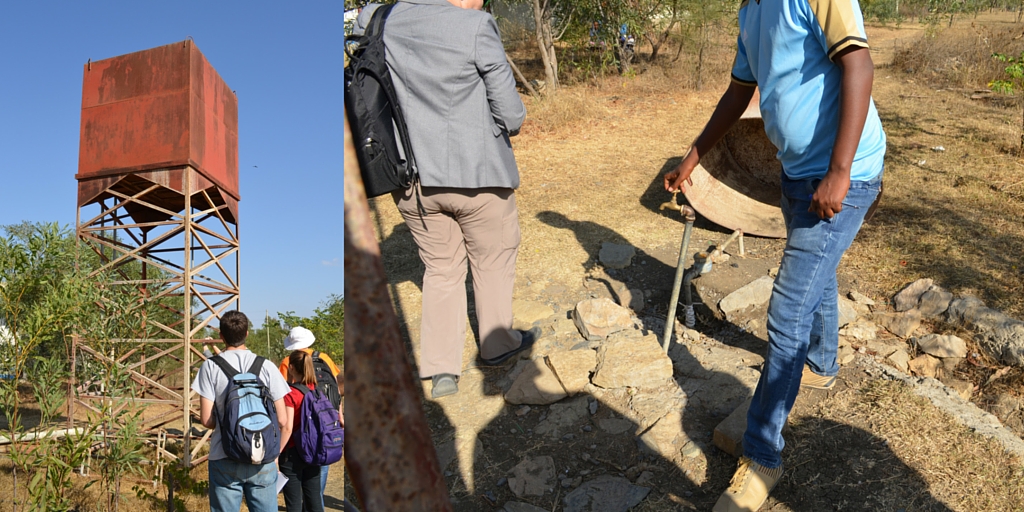
This school’s water tower is not functional, but they do have a tap that supplies treated water part of the day.
Our primary engineer on this project, Robin Shepard, Adjunct Professor of Engineering at Washington University in St. Louis, is a frequent visitor to Ethiopia. She has worked for years with a school for blind children to improve their facilities with the Washington University chapter of Engineers Without Borders.
Robin is excited to be involved in Dignity Period’s work: “I have a weird fascination with sanitation – I believe it is the most important part of health and dignity and the key to many other improvements in the overall health of people in Ethiopia and around the world. I’m also interested in girls’ education – mostly in the states. I participate in several organizations that encourage girls to stay in math and consider careers that are traditionally reserved for men – like engineering. Dignity Period is an organization that brings these two interests together. Also, Freweini Mebrahtu [founder of the Mariam Seba Sanitary Products Factory] is also an engineer – I love that!”
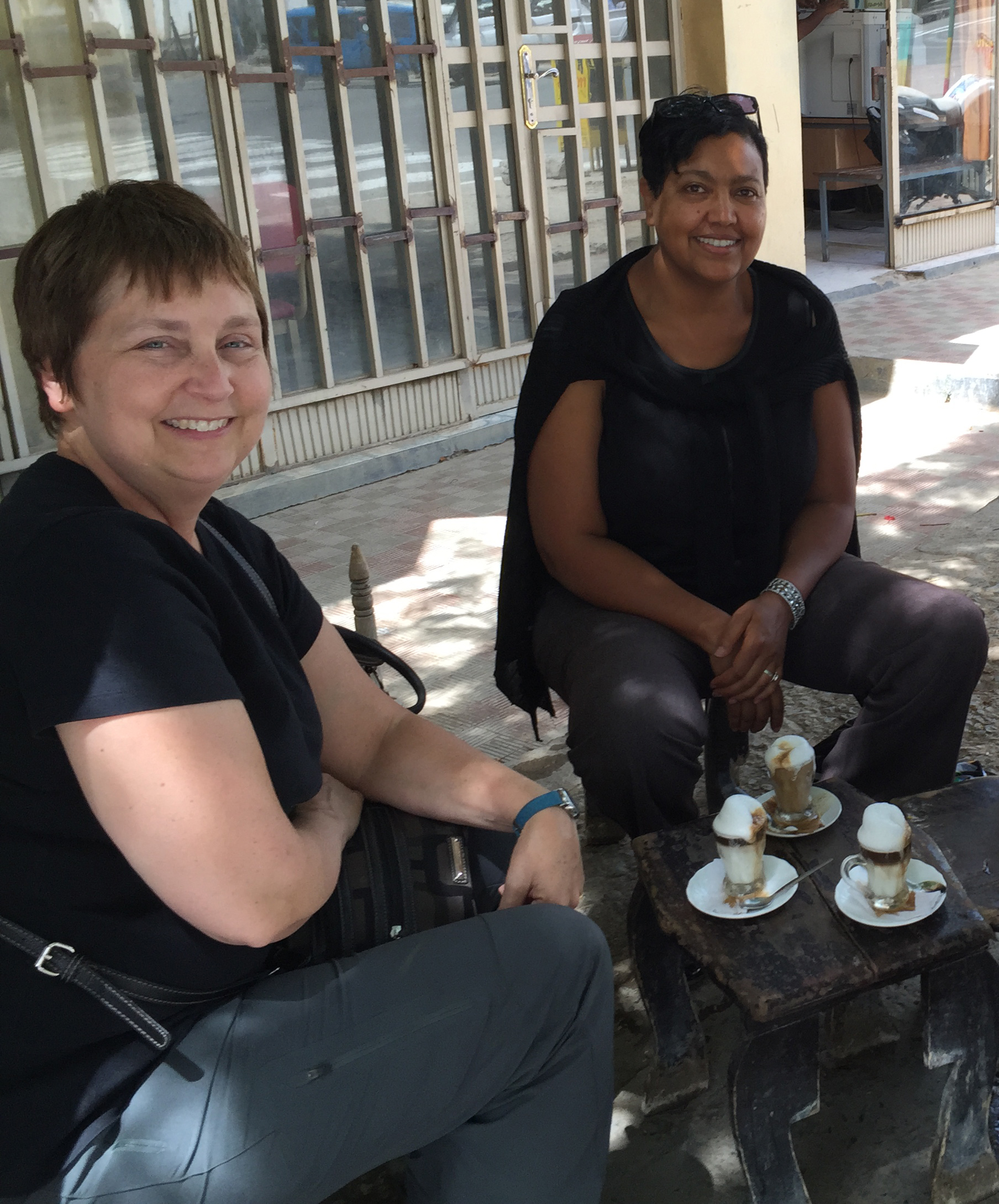
Robin Shepard with Freweini Mebrahtu, founder of the Mariam Seba Sanitary Products Factory.
According to Robin, there are four essential requirements for a model girls’ latrine where menstrual hygiene can be managed with dignity:
- Large stalls so girls can move around with ease,
- Running water,
- A private area outside the stalls that is not open to the outdoors, and
- A welcoming, comfortable atmosphere.
Robin has partnered with a Mekelle University architect, Daniel Semunugus to design latrines that meet these requirements. Daniel is interested in the functionality of the latrine, but he is also concerned with the form. He wants the latrine to use natural lighting effectively and to have adequate airflow, ensuring that the space is well-lit and that the inside air does not get trapped and stagnant.
Robin is also working on this project with the Engineers Without Borders chapter at Washington University and a civil engineering student at Mekelle University.
To bring this project to fruition, Robin will need to obtain buy-in from the schools and local partners on the ground and adequate funds to implement the project. Robin is optimistic: “While toilets and sanitation are not the most glamorous topics, I’d be proud to say that our work to build latrines has enabled girls to succeed in school and get an education that moves them forward in life.”
Donate now to support this project and all of our integrated work to keep Ethiopian girls in school.
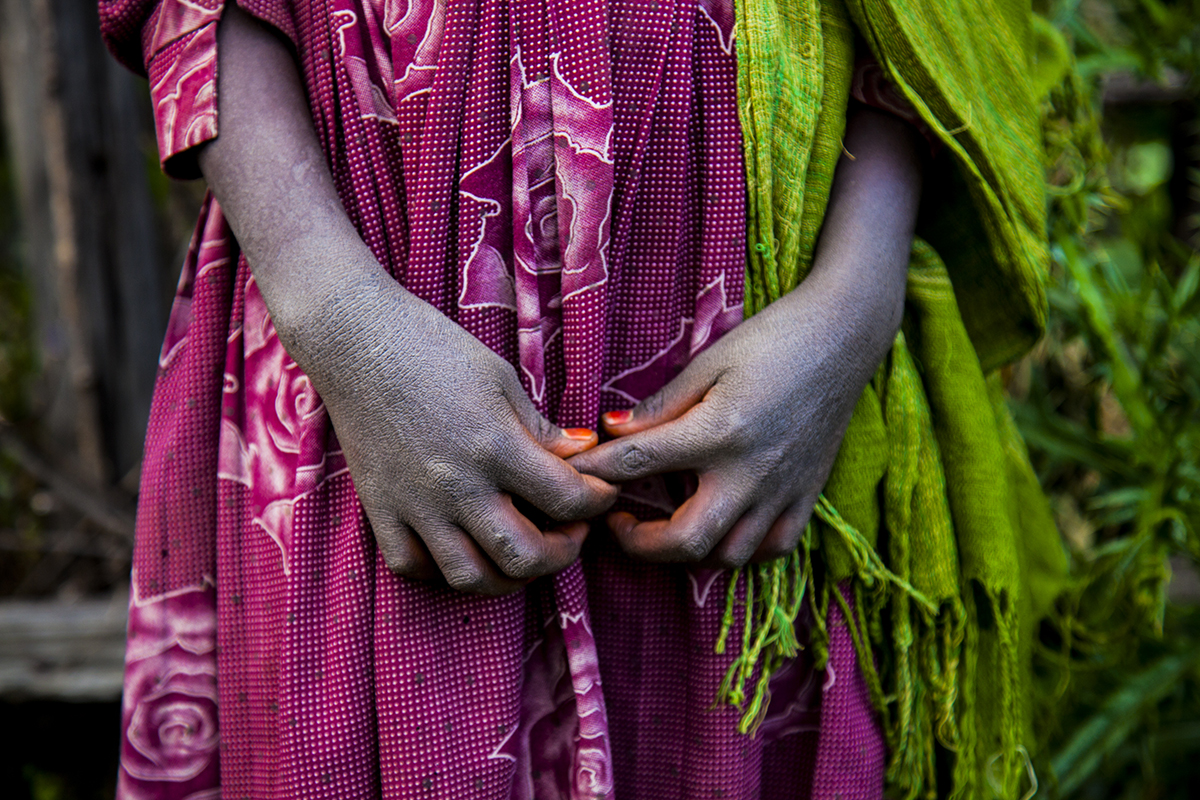

[…] Girls at Adigudem Secondary School have access to more resources than girls at other schools, particularly those in more rural regions. The school has one water tap, though this tap only runs part of the day, and an accessible latrine. Because of these resources, Dignity Period is planning for this school to be a test site for a girls’ latrine with running water. […]